
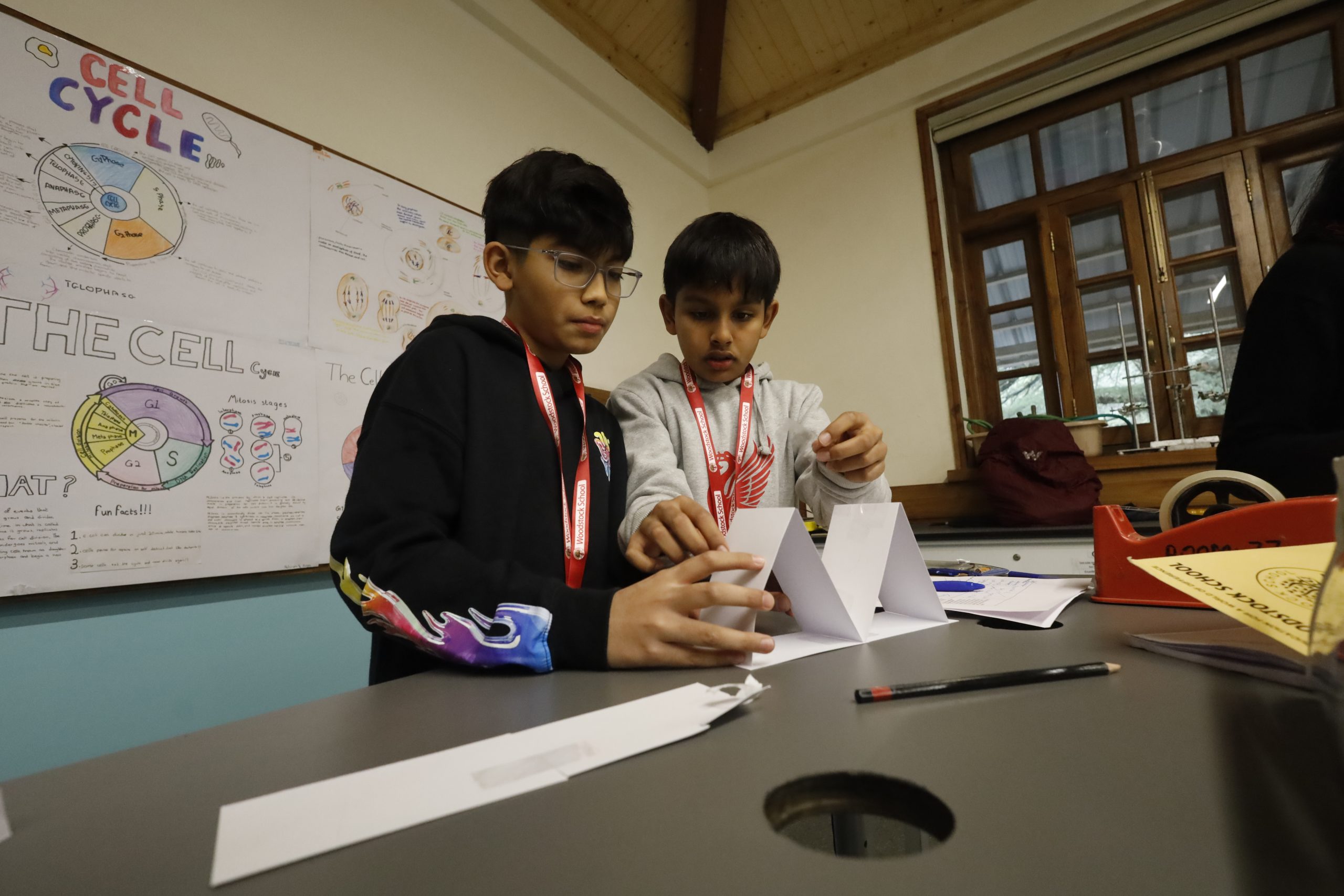
This project-centred course guides students through real-world scientific research about Himalayan hydrology: The challenge of water quality and security.
This project-centred course guides students through the complete Scientific research process, from identifying a real-world Himalayan challenges to producing a publication-ready research paper. Students choose between an Engineering, Chemical or an Environmental Science Track. Through hands-on experimentation, data analysis, and structured scientific writing, students learn how to craft a formal scientific research paper suitable for academic submission or global science competitions.
Who should take this course?
Any student who is interested in Sciences, enjoys hands-on experimentation, or wants to develop scientific research and writing skills. This course is ideal for learners curious about Engineering, Chemical or Environmental Science, or interested in Science-based research opportunities.
What skills and knowledge will participants gain through the course?
Participants will develop a strong foundation in scientific inquiry, including designing experiments, collecting and analysing data, and applying the IMRaD structure to write a professional research paper. They will gain hands-on experience in Engineering, Chemical or Environmental science projects, learn ethical research practices, and build skills in critical thinking, problem-solving, data interpretation, and scientific communication. By the end of the course, students will be equipped to produce a publication-ready research paper suitable for competitions or academic submission.
Course Description (week-wise)
Week One – Foundations & Project Setup
- Introduction to the Scientific Method and Research Ethics
- Understanding the IMRaD structure
- Formulating a research question
- Case Study: The Himalayan challenges
- Track selection: Engineering, Chemical or Environmental Science
- Blueprinting / Water sampling techniques
- Designing the experiment and completing the project plan
Week Two – Execution, Analysis & Writing
- Hands-on project work
- Data collection and analysis
- Identifying errors, patterns, and limitations
- Writing the Introduction, Methods, Results, and Discussion
- Creating graphs and tables
- Writing the bibliography